
CBD Oil Uses: A Guide to Formats, Labels & Expectations
Updated: 1 day ago
People buy CBD oil for many reasons, including interest in relaxation, sleep, or discomfort. Popular use is not proof of effectiveness. A useful first step is to define what you want to understand, then compare the evidence and the actual product label.

CBD oil, hemp seed oil, and prescription CBD
CBD oil usually describes cannabidiol mixed with a carrier oil. Hemp seed oil is an oil from the seeds and should not be assumed to supply a meaningful CBD amount. Prescription CBD medicine is a regulated treatment for specified conditions; a retail tincture is not interchangeable with it.
The FDA’s consumer guide explains the difference between approved use and unproven product claims. CBD should not be presented as a general treatment for heart disease, digestive disorders, cognitive decline, or other medical conditions.
Choose a question before choosing a bottle
For sleep, identify whether the problem is falling asleep, staying asleep, a changing schedule, or daytime sleepiness. For discomfort, a diagnosis and the type of pain matter. For anxiety, distinguish occasional stress from symptoms affecting everyday life.
Our guides to everyday anxiety, CBD and melatonin, and CBD for pain explain narrower questions. None supplies a guaranteed result or a universal treatment dose.
Compare formats for convenience, not promised outcomes
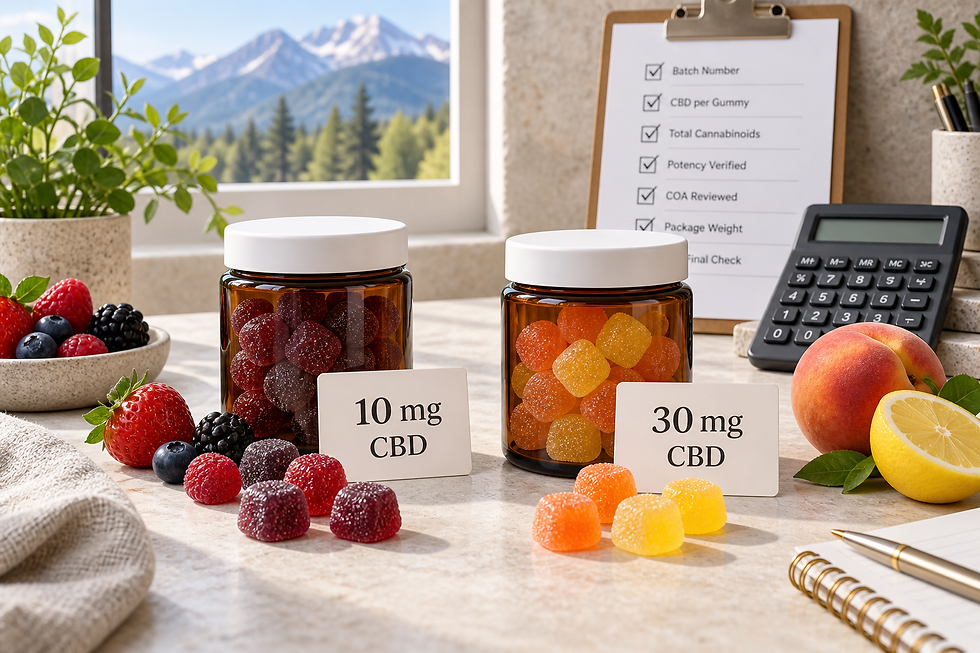
An oil requires measuring a volume. A gummy or softgel provides a labeled amount per unit. A topical is intended for external skin use and may contain ingredients such as moisturizers, menthol, or fragrances. These are different product designs, not a ranking of effectiveness.
Use products only by their labeled route. Do not vape an oral oil or swallow a topical. Do not add a product to a drink and assume it mixes evenly or changes its safety profile.
Read the numbers correctly
Check total CBD, bottle volume, CBD per serving, and the number of servings. A hypothetical 600 mg bottle with 30 mL contains 20 mg per mL; a 1,200 mg bottle of the same size contains 40 mg per mL. The calculation describes strength, not what you should take.
A blend’s total cannabinoid amount may include CBD, CBG, CBN, or other compounds. Look for each one separately. For carrier ingredients and volume examples, read our MCT oil guide.
Quality and suitability are separate checks
A matching lab report can help assess composition and the contaminants tested. It cannot establish that CBD is appropriate for your health or medicines. Review interactions with a pharmacist or clinician, and avoid CBD during pregnancy and breastfeeding.
Does higher potency mean better wellness benefits?
No. It means more CBD per measured amount if the label is accurate. It can also make measurement errors more consequential.
Where should I compare current options?
Use Cannagea’s shop for current formulas, serving information, and prices. Compare like-for-like amounts and verified ingredients rather than broad promises about overall health.


Comments